 Image 1 of 2
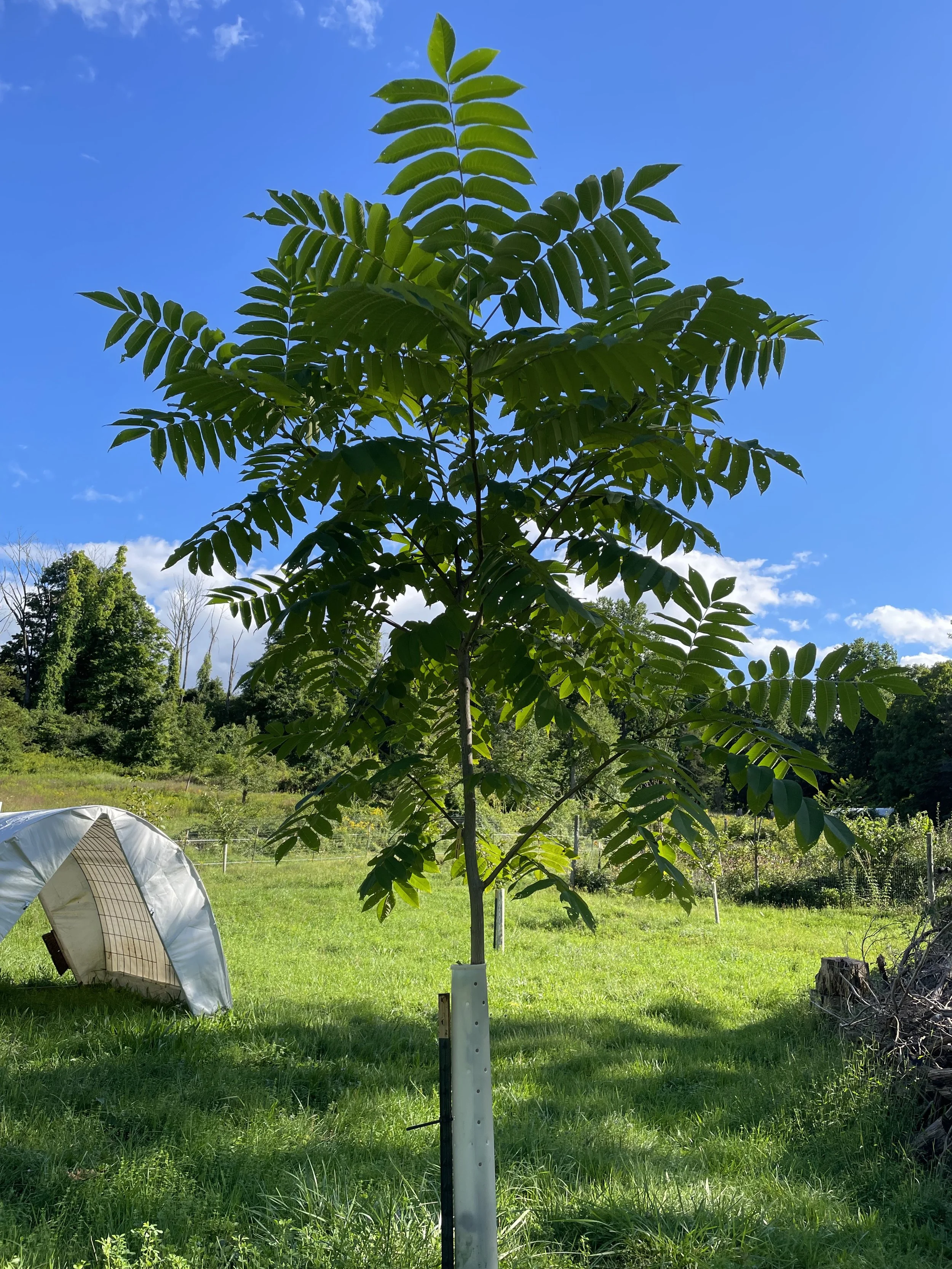 Image 2 of 2
(Juglans ailantifolia)
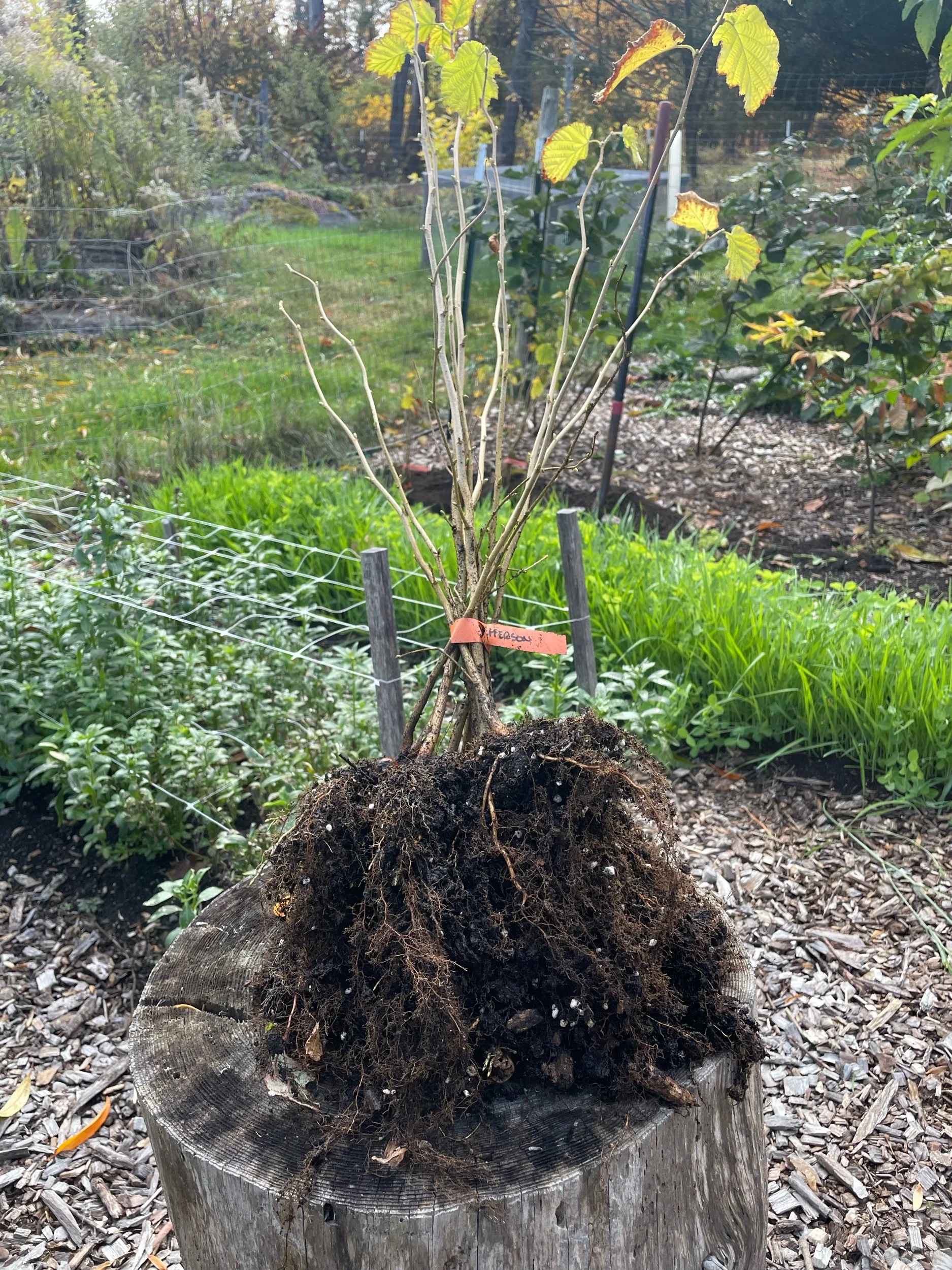
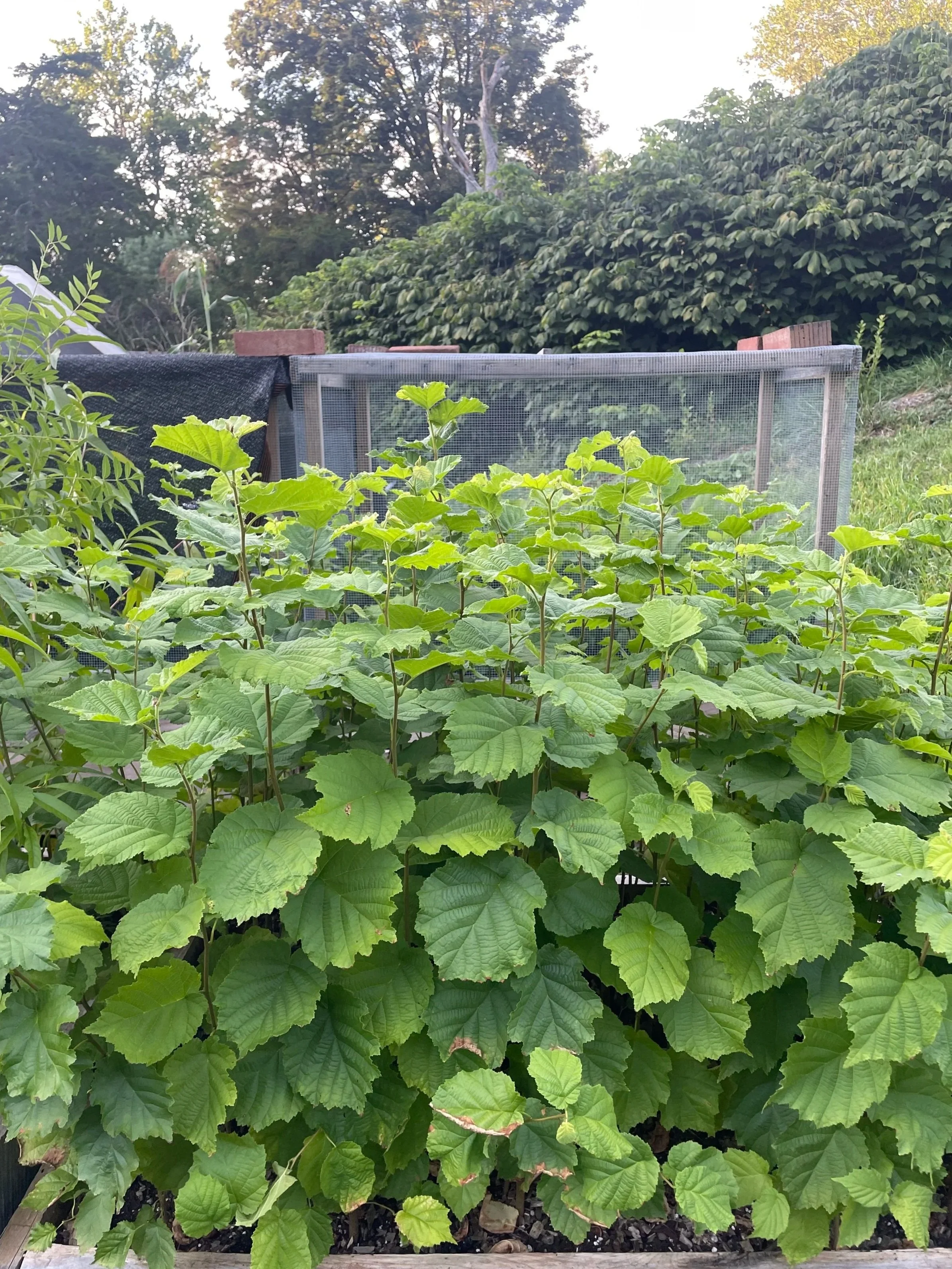
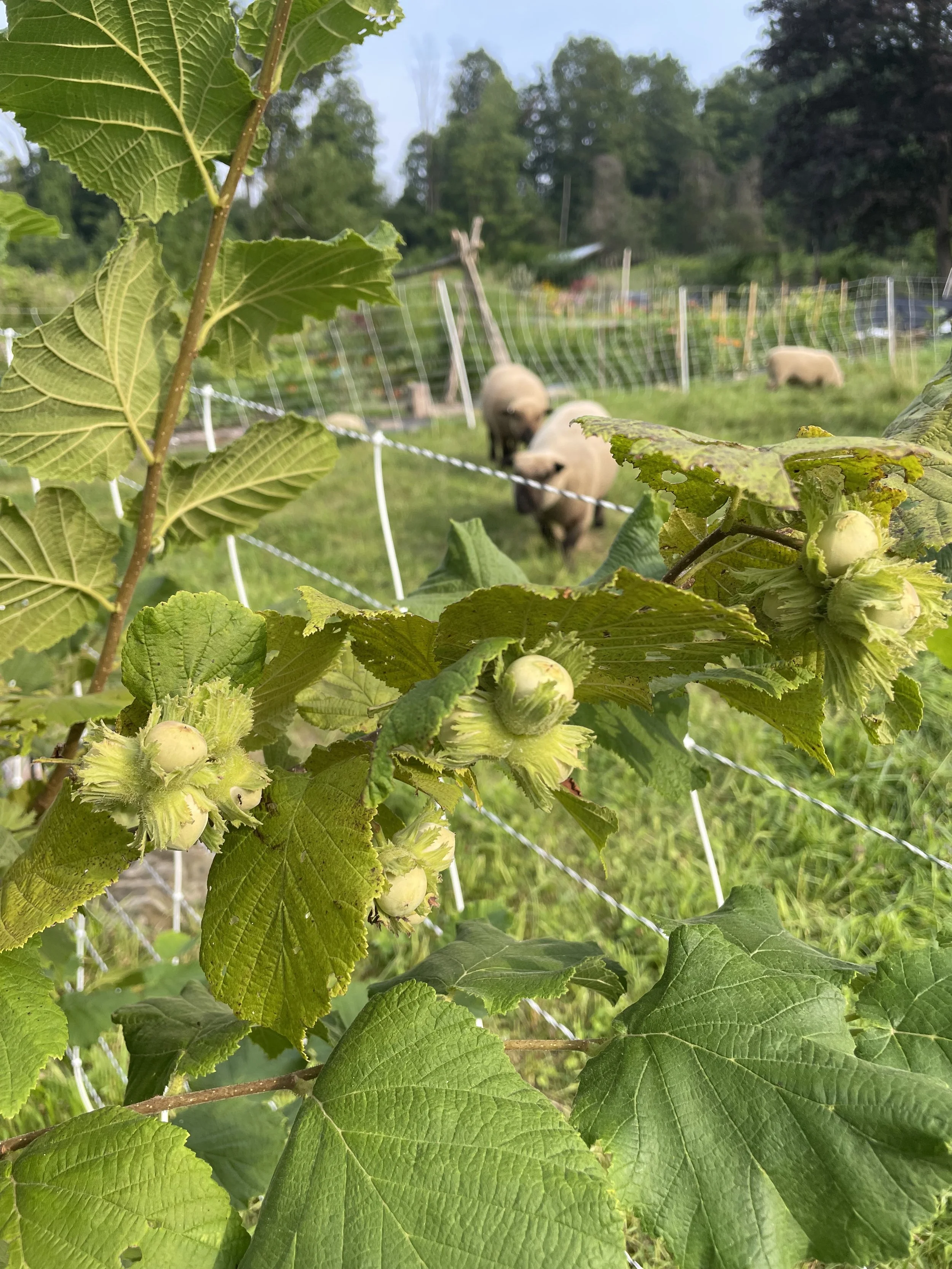
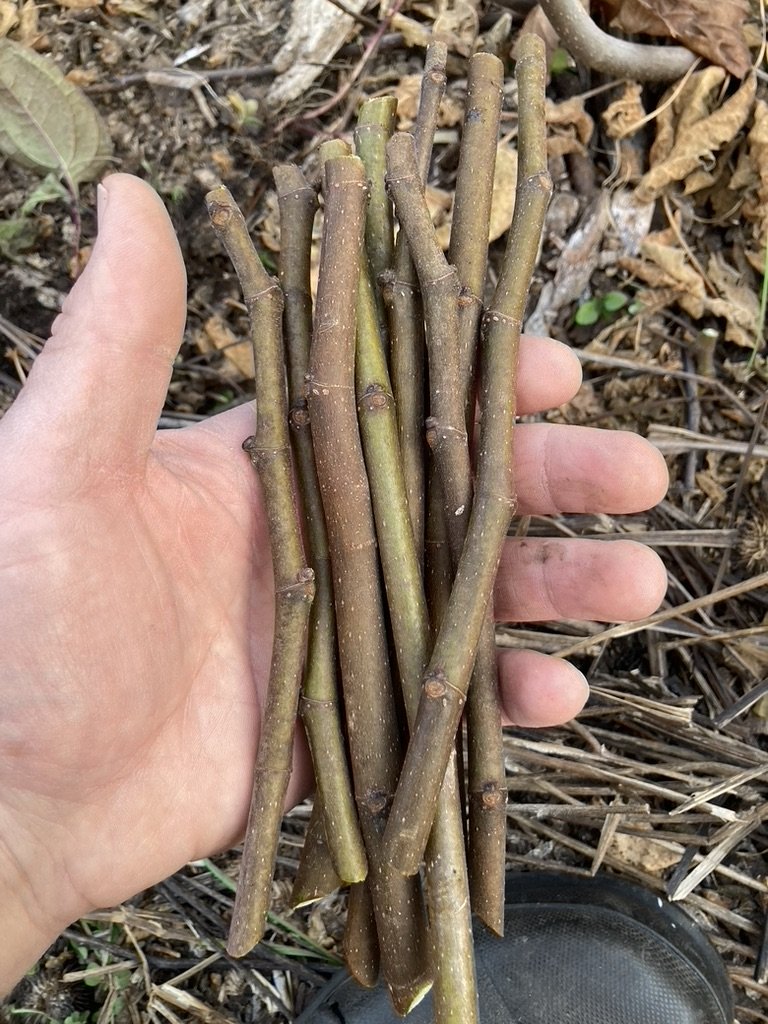
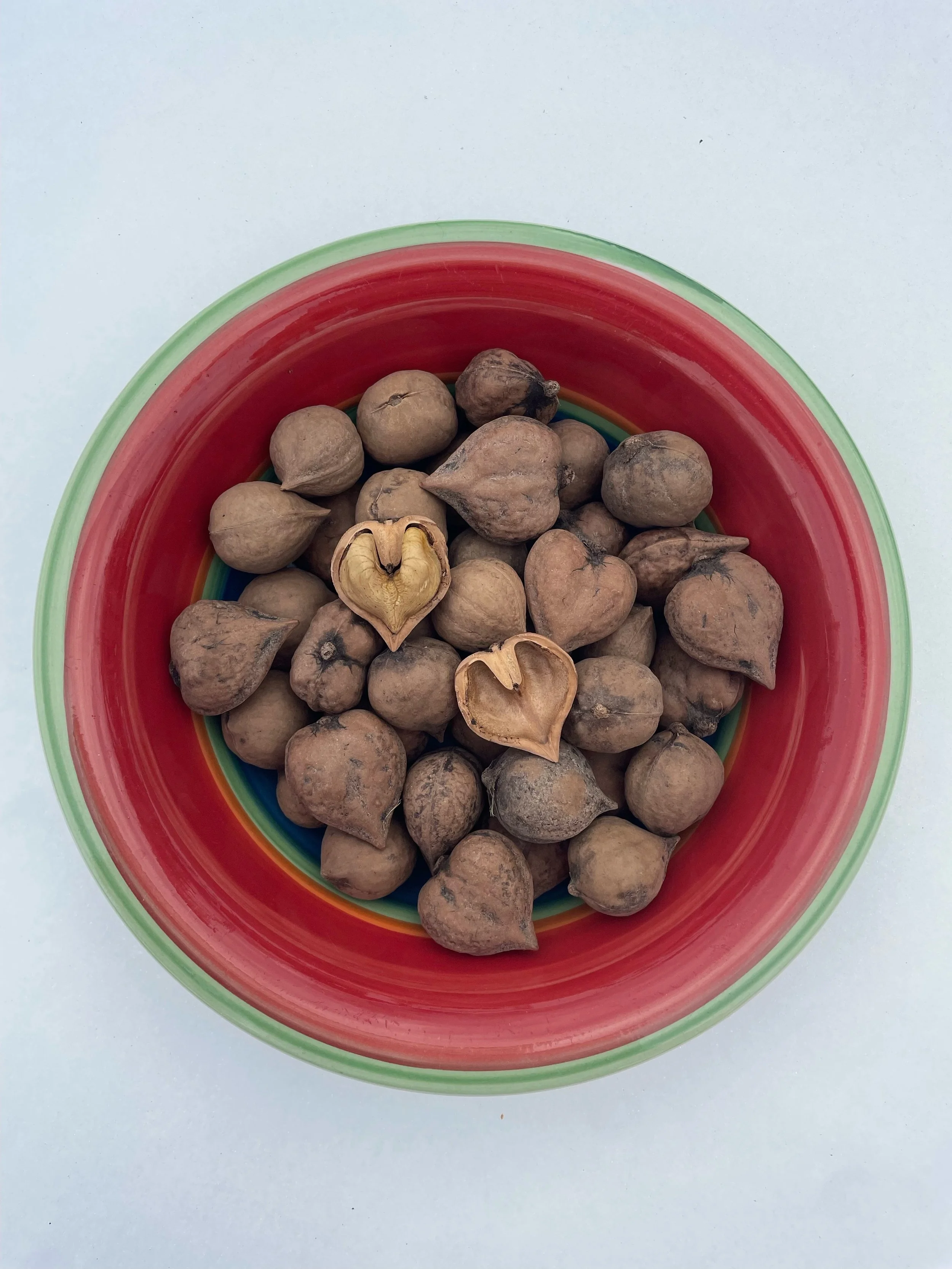
A beautiful walnut tree known for producing easy to crack, heart shaped nuts. While seedling trees will show variability in nut form compared to grafted trees, these are trees grown from cultivar heartnut trees giving them a higher likelihood of desirable traits. Heartnut trees are similar to our native black walnut, with a few exceptions; their roots produce significantly less juglone than black walnut, and they are more precocious, with seedlings producing nuts in as little as 3-4 years after planting. Heartnut also trees tend to be smaller with a more open habit than the tall, straight form of black walnuts. Both trees possess strong disease resistance and great adaptability to various soil types.
Flavor profile: Mild, buttery, sweet
Hardiness zone: 5-8
Light: Full sun
Soil: Fertile soil with pH 6-7.
Mature height: 40’
Spacing: 25-35’
Pollination: Multiple trees required for pollination. Planting 3 or more trees is highly recommended. All of our trees are genetically distinct seedlings which should ensure successful cross-pollination.
Planting tips: Plant with great care to not damage the taproot, which is vital to establishment of most long-lived nut trees. Make sure your planting hole has good drainage by digging a large hole and stabbing the bottom and sides with a shovel so water can drain. Fill the hole with native soil to help water disperse evenly. Consistent watering is crucial for newly planted trees to help minimize transplant shock and establish strong roots.
We are unable to ship this product outside the contiguous US or to the following states: Arkansas, Arizona, California, Iowa, Illinois, Indiana, Kansas, Michigan, Missouri, Mississippi, Nebraska, Oklahoma, Pennsylvania, Texas, West Virginia
(Juglans ailantifolia)
A beautiful walnut tree known for producing easy to crack, heart shaped nuts. While seedling trees will show variability in nut form compared to grafted trees, these are trees grown from cultivar heartnut trees giving them a higher likelihood of desirable traits. Heartnut trees are similar to our native black walnut, with a few exceptions; their roots produce significantly less juglone than black walnut, and they are more precocious, with seedlings producing nuts in as little as 3-4 years after planting. Heartnut also trees tend to be smaller with a more open habit than the tall, straight form of black walnuts. Both trees possess strong disease resistance and great adaptability to various soil types.
Flavor profile: Mild, buttery, sweet
Hardiness zone: 5-8
Light: Full sun
Soil: Fertile soil with pH 6-7.
Mature height: 40’
Spacing: 25-35’
Pollination: Multiple trees required for pollination. Planting 3 or more trees is highly recommended. All of our trees are genetically distinct seedlings which should ensure successful cross-pollination.
Planting tips: Plant with great care to not damage the taproot, which is vital to establishment of most long-lived nut trees. Make sure your planting hole has good drainage by digging a large hole and stabbing the bottom and sides with a shovel so water can drain. Fill the hole with native soil to help water disperse evenly. Consistent watering is crucial for newly planted trees to help minimize transplant shock and establish strong roots.
We are unable to ship this product outside the contiguous US or to the following states: Arkansas, Arizona, California, Iowa, Illinois, Indiana, Kansas, Michigan, Missouri, Mississippi, Nebraska, Oklahoma, Pennsylvania, Texas, West Virginia