(Castanea mollissima)
For reliable nut production, Chinese chestnuts are ideal. Mature trees can produce 50+ pounds of nuts annually, and unlike most nut trees, Chinese chestnuts produce a strong crop every single year! Chinese chestnuts have the largest nuts and highest blight resistance of any chestnut. The nuts are larger than American chestnuts and sweeter than European chestnuts. Chinese chestnuts evolved with the blight fungus that killed the American chestnuts, so they are very resistant to the disease and generally only weakened trees are susceptible. These are reliable, underutilized, easy to grow trees that can start producing in as little as 3 years after planting. We’ve found they do well planted in 5-6’ tree tubes, making them a very easy tree crop to grow in areas with high deer pressure but no deer fencing.
We offer 100% Chinese chestnut seedlings grown from the best seed that we can source. These are seeds from known parent and orchard trees with excellent genetics to produce the best possible Chinese chestnut seedlings for nut production in the northeast. With good genetics, there is a very high percentage that these seedling trees will produce excellent quality nuts that meet or exceed those of grafted trees. This year we have seedlings of the following parent trees:
Stehli Qing Best: These are seedlings grown from seeds of Bob Stehli’s renowned chestnut orchard with Qing lineage. Qing is a Chinese Chestnut cultivar that is widely considered the absolute best parent tree for chestnut production.
Qingsu: A very heavy bearing tree from Redfern farm. A cross of two excellent parent trees, Qing and Auburn Super, these next generation seedlings should result in some of the best nut producers you’ll plant.
Arbor Laedi: Another Redfern Farm tree, known for its laden branches which threaten to break under the weight of heavy nut production.
Orchard Selection: Diverse seedlings grown from nuts of established Chinese chestnut orchards. These seedlings possess reliable genetics, grown from parent trees that were selected for vigor, disease resistance and nut production within an orchard setting.
Red Liu: Seedlings grown from Red Liu nuts. A special chestnut cultivar with excellent nut quality paired with showy, reddish foliage and unique red-burred nuts. While all Red Liu seedlings will produce tasty chestnuts, only about 25% of seedlings will inherit the red qualities of Red Liu parent tree, but those lucky ones that do will go on to be uniquely beautiful specimens!
Flavor profile: Earthy, buttery, sweet, sweet potato
Hardiness zone: 5-8
Light: Full sun
Soil: Well-drained soil with pH 5.5-6.5
Mature height: 40’+
Spacing: 30-50’ apart
Pollination: All seedling chestnuts are genetically distinct, so you will need at least 2 trees for cross-pollination, but 3+ is ideal.
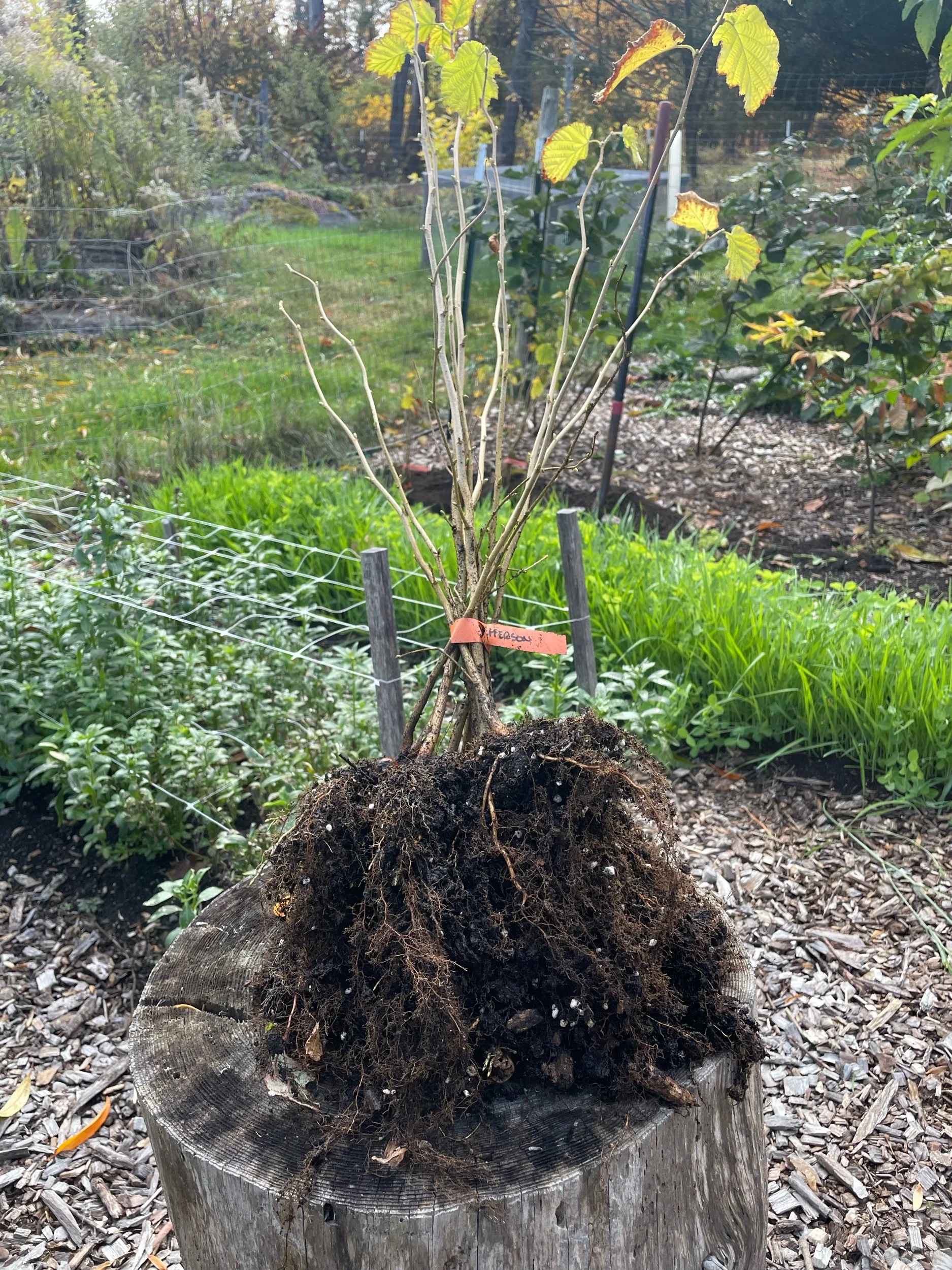
Planting tips: Make sure your planting hole has good drainage by digging a large hole and stabbing the bottom and sides with a shovel so water can drain. Fill the hole with native soil to help water disperse evenly. Consistent watering is crucial for newly planted trees to help minimize transplant shock and establish strong roots.
We are unable to ship this product outside the contiguous US or to California, Oregon, Washington, and Florida.
(Castanea mollissima)
For reliable nut production, Chinese chestnuts are ideal. Mature trees can produce 50+ pounds of nuts annually, and unlike most nut trees, Chinese chestnuts produce a strong crop every single year! Chinese chestnuts have the largest nuts and highest blight resistance of any chestnut. The nuts are larger than American chestnuts and sweeter than European chestnuts. Chinese chestnuts evolved with the blight fungus that killed the American chestnuts, so they are very resistant to the disease and generally only weakened trees are susceptible. These are reliable, underutilized, easy to grow trees that can start producing in as little as 3 years after planting. We’ve found they do well planted in 5-6’ tree tubes, making them a very easy tree crop to grow in areas with high deer pressure but no deer fencing.
We offer 100% Chinese chestnut seedlings grown from the best seed that we can source. These are seeds from known parent and orchard trees with excellent genetics to produce the best possible Chinese chestnut seedlings for nut production in the northeast. With good genetics, there is a very high percentage that these seedling trees will produce excellent quality nuts that meet or exceed those of grafted trees. This year we have seedlings of the following parent trees:
Stehli Qing Best: These are seedlings grown from seeds of Bob Stehli’s renowned chestnut orchard with Qing lineage. Qing is a Chinese Chestnut cultivar that is widely considered the absolute best parent tree for chestnut production.
Qingsu: A very heavy bearing tree from Redfern farm. A cross of two excellent parent trees, Qing and Auburn Super, these next generation seedlings should result in some of the best nut producers you’ll plant.
Arbor Laedi: Another Redfern Farm tree, known for its laden branches which threaten to break under the weight of heavy nut production.
Orchard Selection: Diverse seedlings grown from nuts of established Chinese chestnut orchards. These seedlings possess reliable genetics, grown from parent trees that were selected for vigor, disease resistance and nut production within an orchard setting.
Red Liu: Seedlings grown from Red Liu nuts. A special chestnut cultivar with excellent nut quality paired with showy, reddish foliage and unique red-burred nuts. While all Red Liu seedlings will produce tasty chestnuts, only about 25% of seedlings will inherit the red qualities of Red Liu parent tree, but those lucky ones that do will go on to be uniquely beautiful specimens!
Flavor profile: Earthy, buttery, sweet, sweet potato
Hardiness zone: 5-8
Light: Full sun
Soil: Well-drained soil with pH 5.5-6.5
Mature height: 40’+
Spacing: 30-50’ apart
Pollination: All seedling chestnuts are genetically distinct, so you will need at least 2 trees for cross-pollination, but 3+ is ideal.
Planting tips: Make sure your planting hole has good drainage by digging a large hole and stabbing the bottom and sides with a shovel so water can drain. Fill the hole with native soil to help water disperse evenly. Consistent watering is crucial for newly planted trees to help minimize transplant shock and establish strong roots.
We are unable to ship this product outside the contiguous US or to California, Oregon, Washington, and Florida.

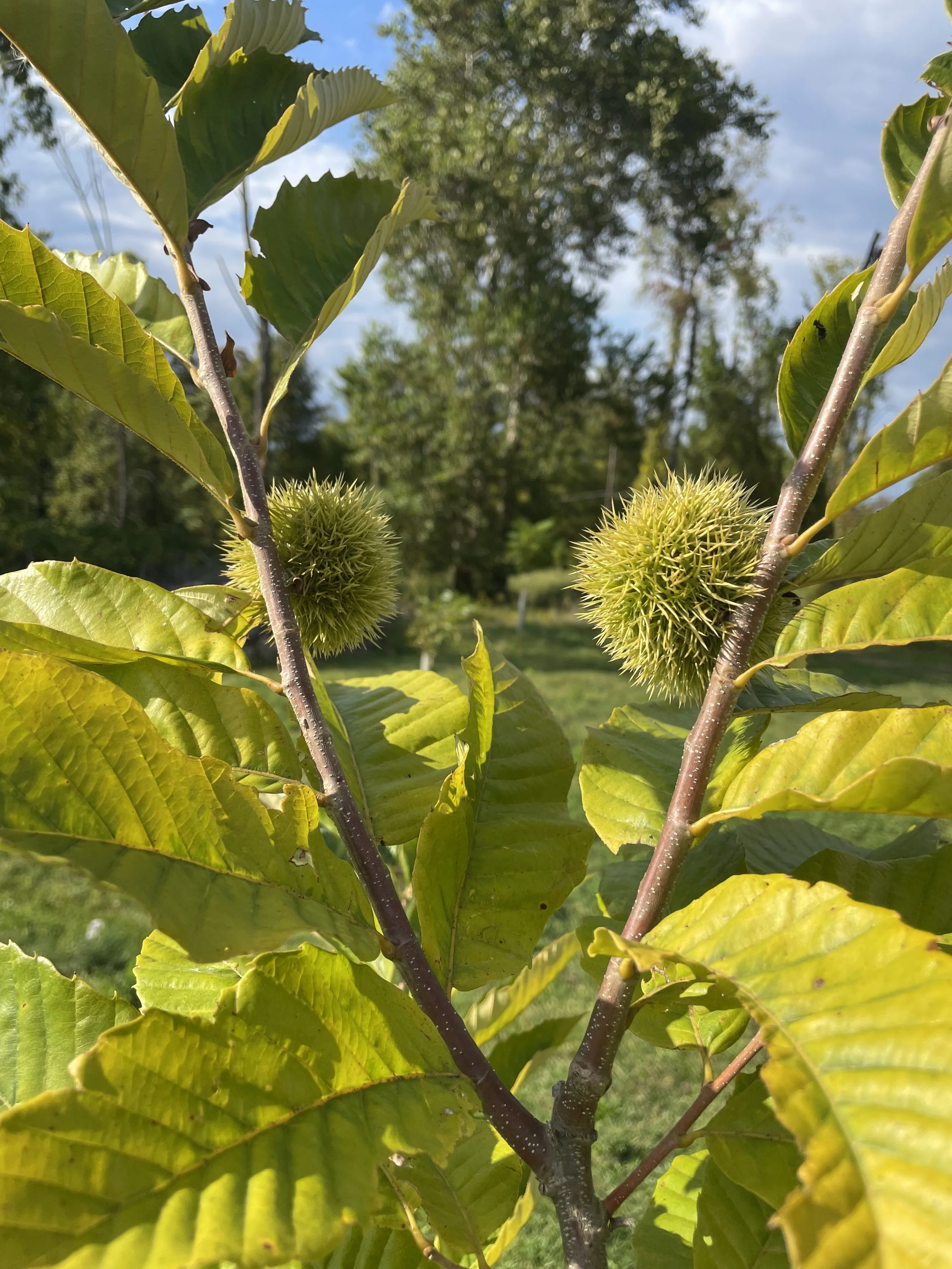 Image 1 of 6
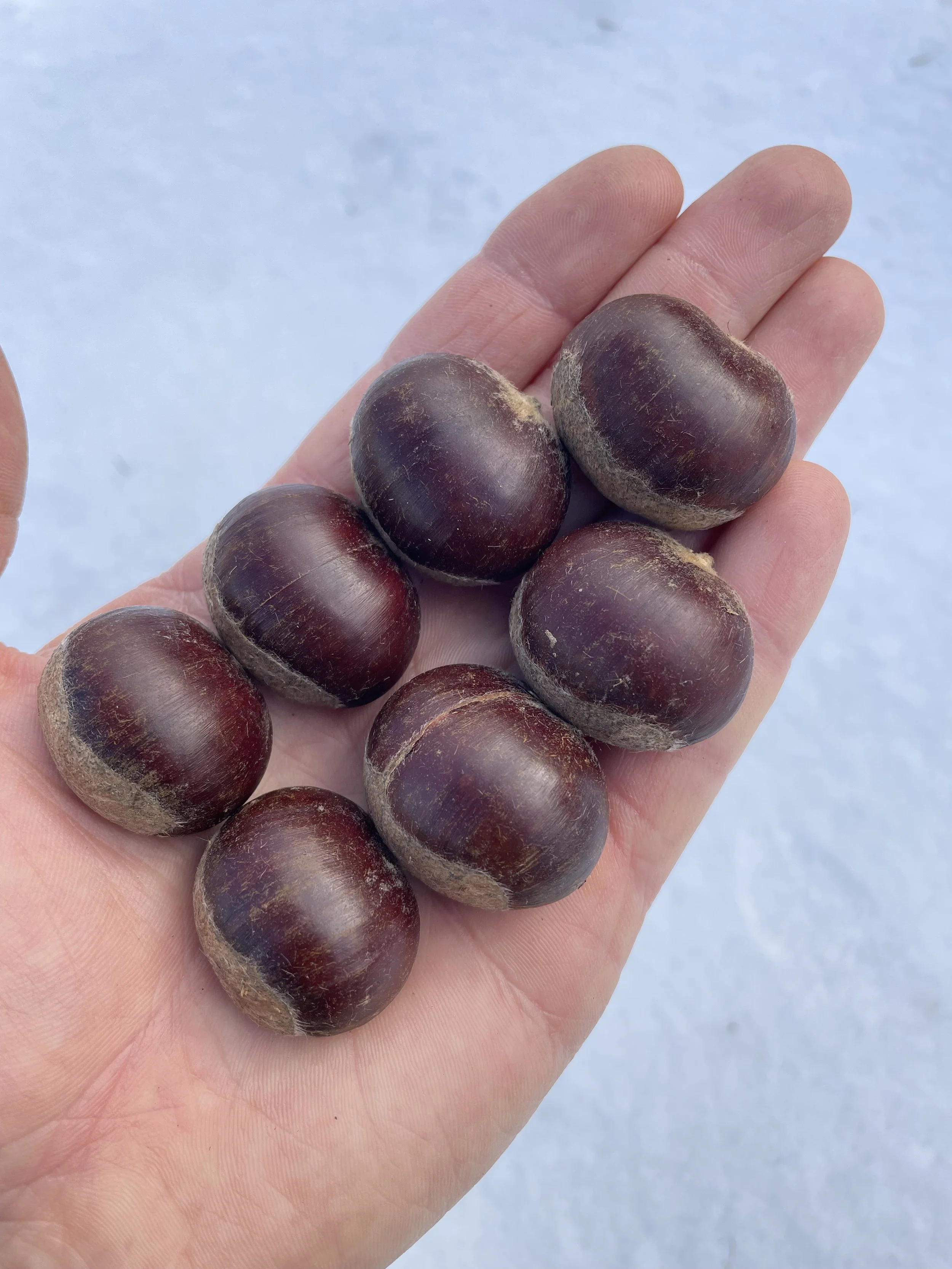 Image 2 of 6
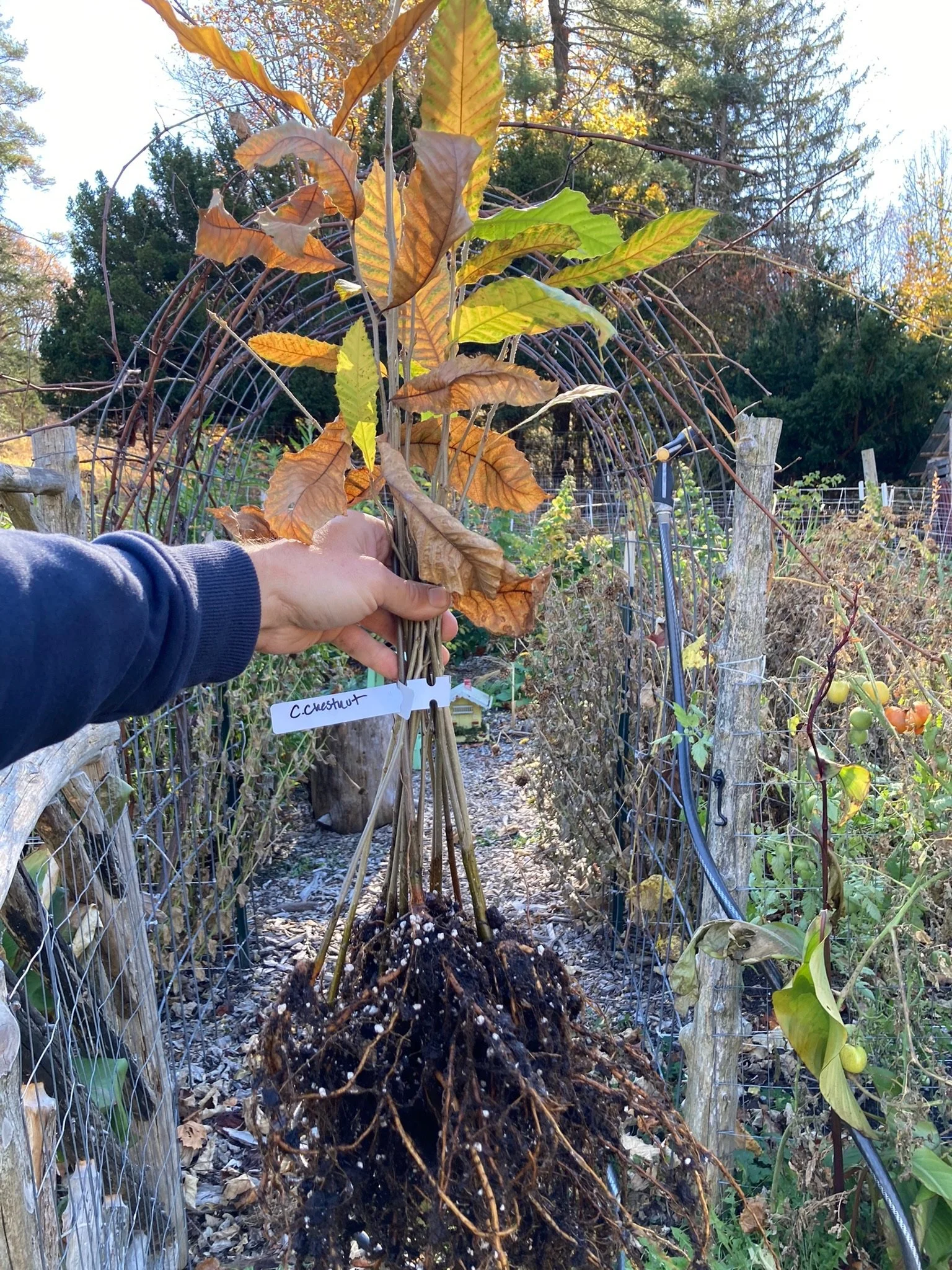 Image 3 of 6
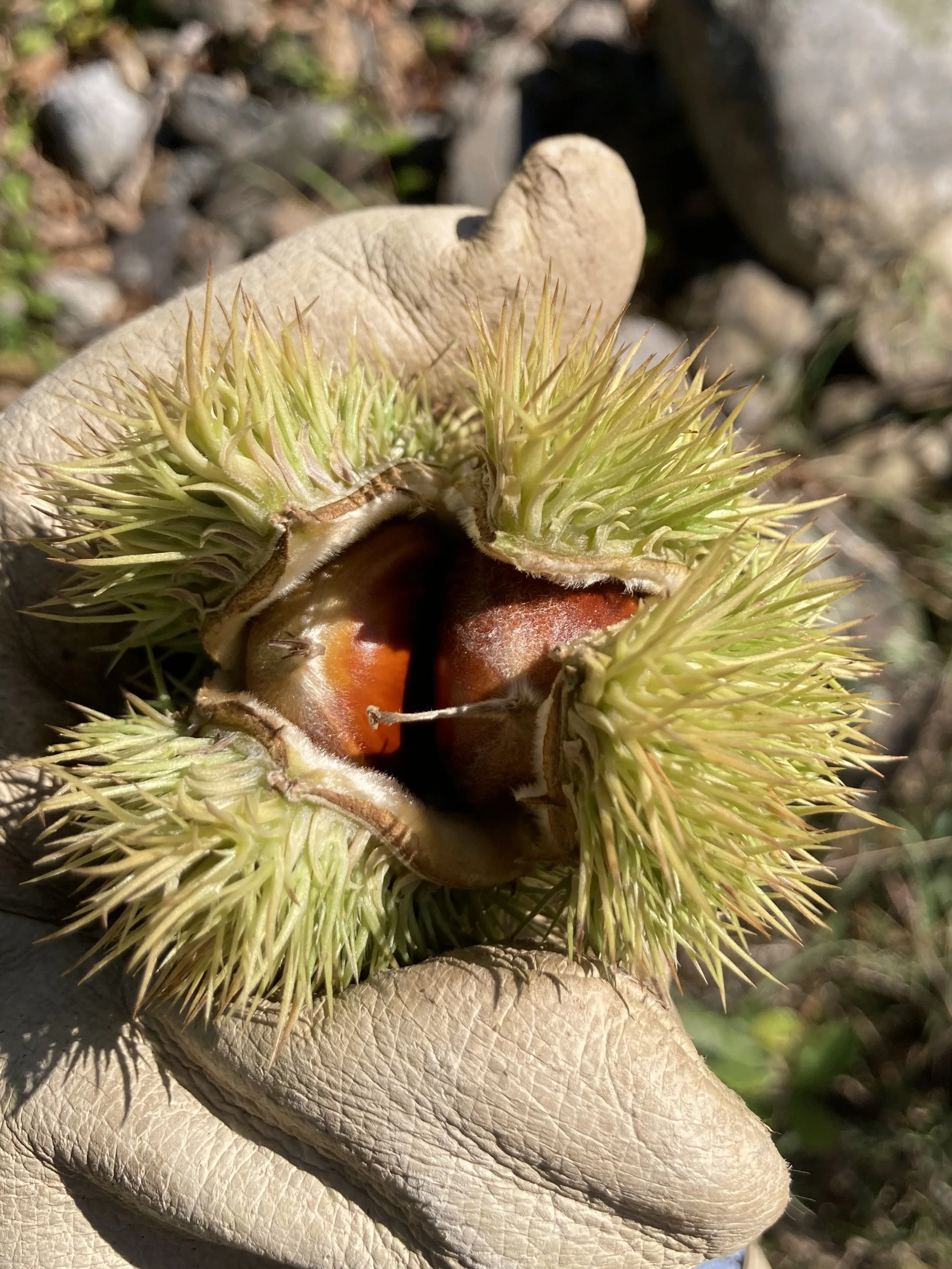 Image 4 of 6
 Image 5 of 6
 Image 6 of 6