 Image 1 of 1
(Pyrus spp.)
Pears are a staple of any backyard garden or orchard. We offer a variety of disease resistant Asian and European pears, which are recommended for those who have had trouble with pest and disease pressure on other common tree fruits like apples and peaches.
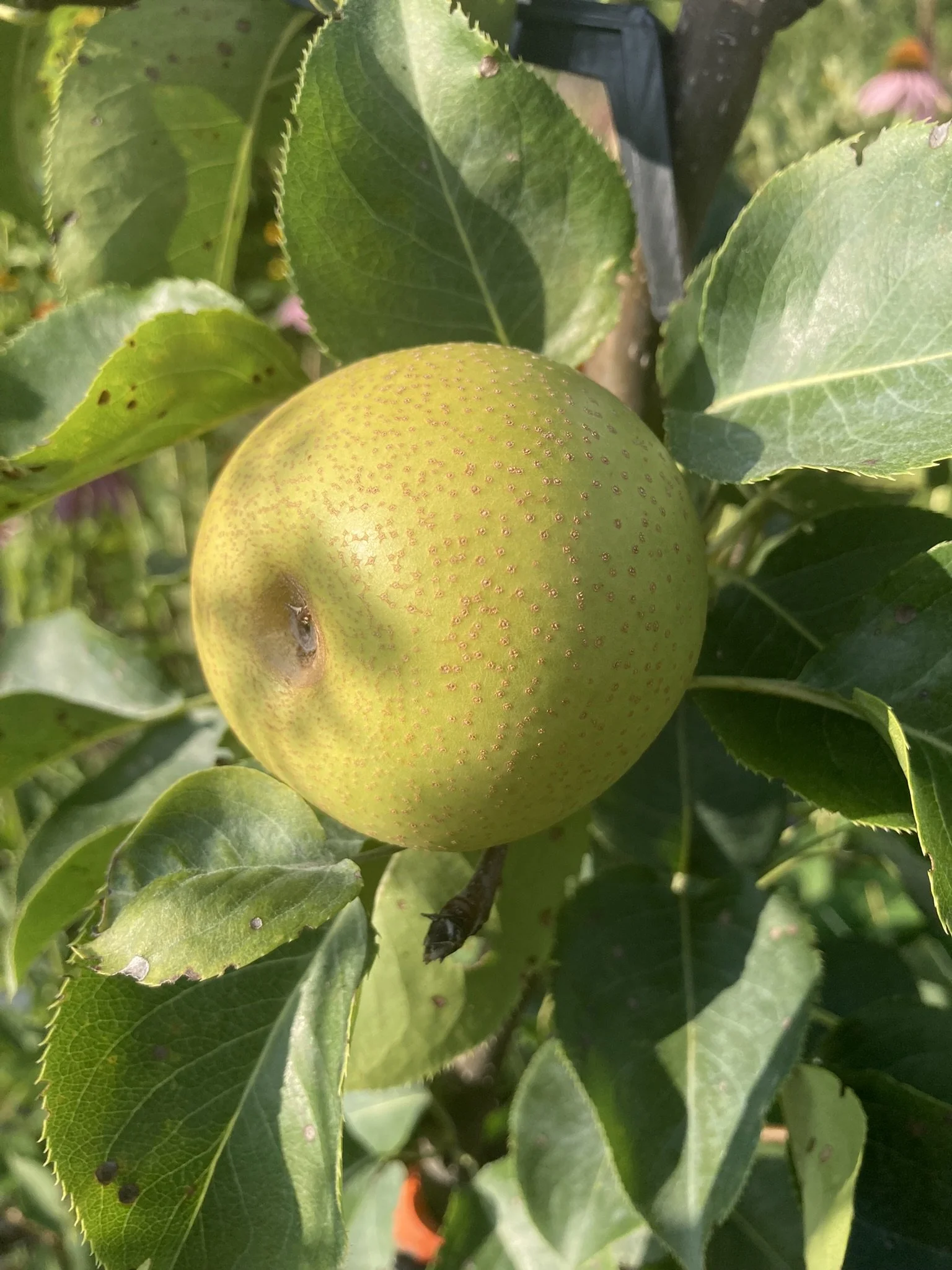
Shinkseiki: A standard of Asian pears. Low-maintenance, self-fertile trees with delicious crisp fruit that ripens early (mid summer).
Shinko: A late season Asian pear with excellent flavor and great storage capability, which is a great quality for this heavy yielder. One of the most fireblight resistant Asian pears.
Ichiban Nashi: Named “first pear” for being the earliest Asian pear to ripen in summer. Thin-skinned and sweet, complex flavored fruits for an early season variety with notes of butterscotch.
Korean Giant: An Asian pear known for its extra-large, sweet fruit. Korean Giant pears have a high sugar content, store very well, and can produce fruits over 1 lb each.
Drippin’ Honey: A hard to find, late-season Asian pear with honey-sweet flavor. Very productive and capable of producing large, one pound fruits!
Moonglow: Delicious low-acid European pears on a hardy, disease resistant tree. Very strong resistance to fireblight.
Magness: A disease resistant European pear with tasty, grit-free fruit that stores well.
Seckel: A super sweet, small-fruited European pear with vigorous growth and good disease resistance.
Hardiness zone: Varies by cultivar, generally 5-9
Light: Full sun
Soil: Well-drained, fertile soil with pH 6-7
Pollination: Aside from self-fertile pear varieties (like Shinseiki), pears require two distinct cultivars for pollination, so multiple varieties are required. Asian pears and European pears will also pollinate each other if their bloom times overlap.
Planting tips: Make sure your planting hole has good drainage by digging a large hole and stabbing the bottom and sides with a shovel so water can drain. Fill the hole with native soil to help water disperse evenly. Consistent watering is crucial for newly planted trees to help minimize transplant shock and establish strong roots.
Pear ‘whips’ are grafted trees that are one year old and have few to no branches. At planting time, it is recommended to cut the tree back at your preferred height of the first scaffold branches to induce some branching, usually around 3-4’. This will determine how low your first set of branches is for future access, harvesting, and mowing, so choose wisely!
Growing tips: Prune pears so that there is good airflow between all branches and each layer of scaffolding. Most diseases take hold on leaves that are wet for extended periods, so maximizing airflow on trees is crucial quick drying after rain and dew. Keep trees mulched, especially young trees as their roots do not tolerate competition for water and nutrients.
We are unable to ship this product outside the contiguous US or to California.
(Pyrus spp.)
Pears are a staple of any backyard garden or orchard. We offer a variety of disease resistant Asian and European pears, which are recommended for those who have had trouble with pest and disease pressure on other common tree fruits like apples and peaches.
Shinkseiki: A standard of Asian pears. Low-maintenance, self-fertile trees with delicious crisp fruit that ripens early (mid summer).
Shinko: A late season Asian pear with excellent flavor and great storage capability, which is a great quality for this heavy yielder. One of the most fireblight resistant Asian pears.
Ichiban Nashi: Named “first pear” for being the earliest Asian pear to ripen in summer. Thin-skinned and sweet, complex flavored fruits for an early season variety with notes of butterscotch.
Korean Giant: An Asian pear known for its extra-large, sweet fruit. Korean Giant pears have a high sugar content, store very well, and can produce fruits over 1 lb each.
Drippin’ Honey: A hard to find, late-season Asian pear with honey-sweet flavor. Very productive and capable of producing large, one pound fruits!
Moonglow: Delicious low-acid European pears on a hardy, disease resistant tree. Very strong resistance to fireblight.
Magness: A disease resistant European pear with tasty, grit-free fruit that stores well.
Seckel: A super sweet, small-fruited European pear with vigorous growth and good disease resistance.
Hardiness zone: Varies by cultivar, generally 5-9
Light: Full sun
Soil: Well-drained, fertile soil with pH 6-7
Pollination: Aside from self-fertile pear varieties (like Shinseiki), pears require two distinct cultivars for pollination, so multiple varieties are required. Asian pears and European pears will also pollinate each other if their bloom times overlap.
Planting tips: Make sure your planting hole has good drainage by digging a large hole and stabbing the bottom and sides with a shovel so water can drain. Fill the hole with native soil to help water disperse evenly. Consistent watering is crucial for newly planted trees to help minimize transplant shock and establish strong roots.
Pear ‘whips’ are grafted trees that are one year old and have few to no branches. At planting time, it is recommended to cut the tree back at your preferred height of the first scaffold branches to induce some branching, usually around 3-4’. This will determine how low your first set of branches is for future access, harvesting, and mowing, so choose wisely!
Growing tips: Prune pears so that there is good airflow between all branches and each layer of scaffolding. Most diseases take hold on leaves that are wet for extended periods, so maximizing airflow on trees is crucial quick drying after rain and dew. Keep trees mulched, especially young trees as their roots do not tolerate competition for water and nutrients.
We are unable to ship this product outside the contiguous US or to California.